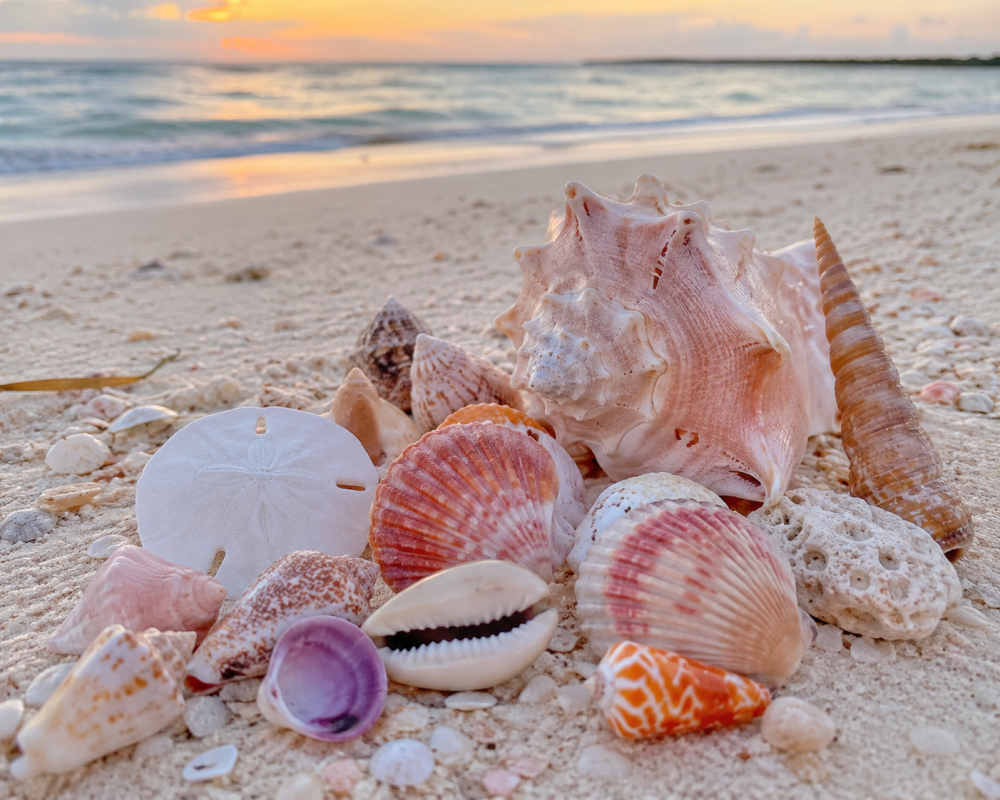
Some of the best beach memories are the small ones.
A shell tucked into a pocket, a sand dollar spotted in shallow water, a slow walk after dinner with bare feet in the sand, a quiet moment when the sky starts turning pink and gold over the Gulf.
St. Pete Beach is made for that kind of travel. And, you don’t need a packed schedule to enjoy it. A lot of the fun comes from paying attention to what is already around you: the tide line, the birds, the light, the breeze, and the way the beach changes from morning to evening.
Start with the Shoreline
Shell hunting is easiest when you stop thinking of it as a mission. The best finds often show up when you are wandering slowly, looking down now and then, and letting the walk set the pace.
Early morning is usually a good time to look. The beach is quieter, the sun is softer, and the tide may have left behind small treasures overnight. You might find coquinas, scallop shells, small whelks, bits of coral, or smooth pieces of shell worn down by the surf.
After a windy day or a stormy stretch, the shell line can be more interesting. But that doesn’t mean you need bad weather for good shelling. It just means the Gulf is always rearranging things.
Bring a small mesh bag or a cup if you want to collect a few shells, but keep it simple. Half the fun is choosing only the ones you really like.
Look Closely for Sand Dollars
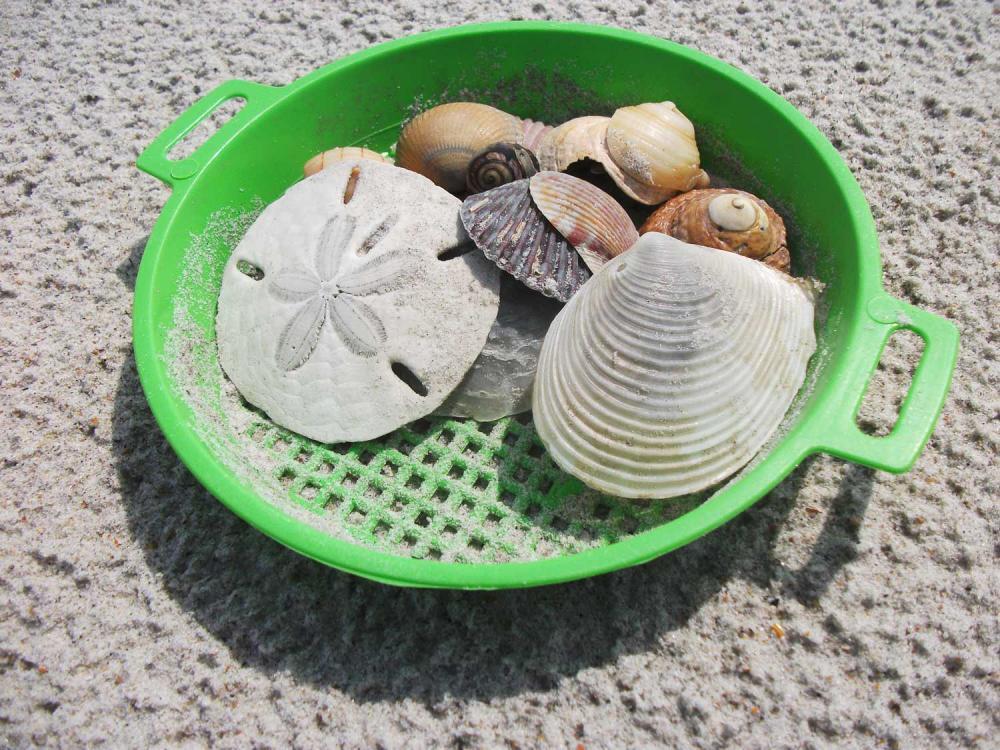
Sand dollars are one of those finds that make people stop in their tracks. Around St. Pete Beach, they are sometimes spotted in shallow water, near sandbars, or along quieter stretches of shoreline.
The most important thing to know is whether the sand dollar is alive. Live sand dollars are often darker in color, may have tiny moving spines, and should be left in the water. White, dry sand dollars are no longer living and are the kind people usually keep.
If you are not sure, leave it where it is. That is the easiest rule, and it keeps the beach healthy for the next person too.
Sand dollars also break rather easily, so if you find one you can keep, carry it gently. A hard-sided container or small box works better than tossing it into a beach bag with towels, sunscreen, and sunglasses.
Make the Walk Part of the Day
A beach walk does not have to be a workout. Go at your own pace, stop and take brakes, cool down in the water.
Some ideal times are a walk in the morning before the sand heats up. A walk after lunch when you want to stretch your legs. And of course a walk after dinner when the air starts to cool and the beach feels calm again.
Barefoot walks are especially nice near the waterline, where the sand is packed and smooth. You can go slowly, watch the birds work the edge of the surf, and let the waves catch your ankles now and then.
This is also when you notice the little changes. The beach looks different depending on the tide. The color of the water shifts through the day. The same stretch of sand can feel bright and busy in the afternoon, then soft and quiet near sunset.
Plan Loosely Around the Golden Hour
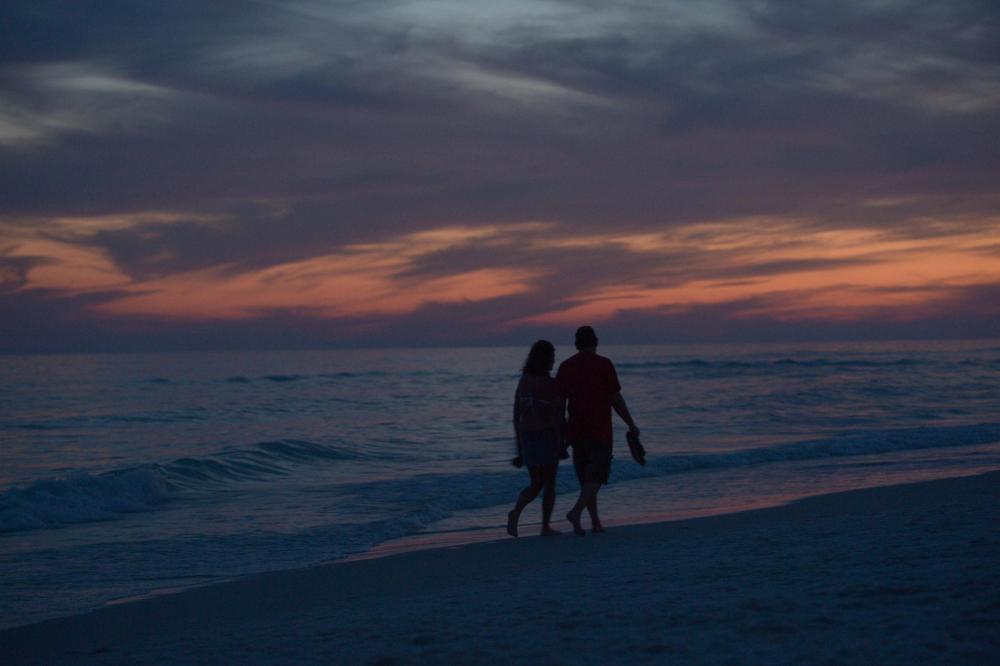
The golden hour is the window before sunset when the light gets warmer and everything looks a little softer. On the Gulf side, it is one of the best times to be outside.
Check your weather app for sunset, get to the beach a little early, bring a towel or chair, and let the evening unfold. Some people like to walk during golden hour. Others like to sit still and watch the color build.
The Gulf sunset can change quickly. One minute the sky is pale and quiet. A few minutes later, the water is glowing and everyone on the beach is facing the same direction.
It’s worth staying a little after the sun drops too. The afterglow can be just as pretty as the sunset itself, with cooler pinks, purples, and blues spreading across the sky.
Keep Dinner Easy
A sunset walk pairs well with a relaxed dinner. That might mean casual seafood nearby, sandwiches on the balcony, pizza after a pool afternoon, or something simple picked up earlier in the day.
The best beach meals are often the ones that do not take much effort. If you are staying somewhere with a kitchen, breakfast and lunch can stay easy, and dinner can be whatever fits the mood.
After dinner, head back out for one more walk. The beach feels different at night. The air is cooler, the crowds thin out, and the sound of the water carries a little more.
What to Bring for Shell Hunting and Sunset Walks
You don’t really need much, which is part of the appeal.
A small bag for shells is helpful. So are sandals that are easy to slip on and off, a reusable water bottle, sunscreen, and sunglasses. If you plan to stay through sunset, bring a light layer during cooler months.
For photos, wipe your phone lens before golden hour. Beach days have a way of covering everything in salt, sand, and sunscreen.
A small flashlight can be useful if you walk back after dark, especially when leaving the beach access area. Keep the light pointed down and be mindful of wildlife, especially during sea turtle nesting season.
Be Gentle with the Beach
The best beach habits are simple. Take only empty shells. Leave live creatures where you found them. Fill in holes before you leave. Carry out anything you brought with you.
If you see birds resting together, give them space. Shorebirds use the beach too, and they need quiet spots to feed and rest.
Small choices like this keep the shoreline beautiful and make the experience better for everyone.
A Relaxed Place to Base the Trip
For travelers who want this kind of slower Gulf Coast stay, Hideaway Sands Resort is a beachfront option in St. Pete Beach with condo-style accommodations close to the sand. For stay-specific questions, guests can call (727) 367-2781 or use the contact page.
Let the Small Things be Enough
A beach trip does not have to be complicated to be memorable.
You might not remember every restaurant or every stop. But you will probably remember the shell you found by accident, the sand dollar you spotted in the shallows, the walk you took after dinner, and the evening the sky turned gold over the Gulf.
That is the good stuff. And on St. Pete Beach, it is right there waiting.